
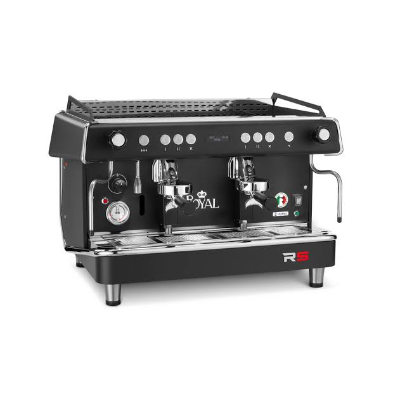
The commercial espresso machine market is quite competitive if you’ve been looking recently. All brands assert thermal stability, their spec sheets boast “Italian craftsmanship,” and eventually the machines become indistinguishable. So when customers ask us about the BFC Vittorio RS 2 Group HG, we like to give them the straight answer rather than the brochure answer.
We’ve installed, serviced and repaired a fair few of these over the years, including machines in cafés, restaurants and coffee-focused hospitality venues where reliability matters more than brochure language. So this isn’t a rewritten spec sheet — it’s what we’d tell you if you walked into Service Sphere and asked whether this machine is right for your café, restaurant or roastery.
Find out more about the Vittorio RS 2
What Is the BFC Vittorio RS 2 Group HG?
The Vittorio RS comes out of BFC srl, a family-run manufacturer based in Conegliano, in Italy’s Veneto region — the same part of the country that’s produced a good chunk of the commercial espresso machines you’ll find behind counters across Australia. BFC build their boilers, copper pipework and steel bodywork in-house rather than outsourcing to third parties, which is part of why the RS range has developed a reputation for being a workhorse rather than a show pony.
The “2 Group” designation means two brew heads, which puts it squarely in the category most independent cafés and small-to-medium hospitality venues are shopping in — enough capacity to handle a steady rush without the footprint (or price tag) of a 3-group commercial rig built for a 300-cup-a-day CBD site.
The Features That Matter
A lot of espresso machine reviews list every spec on the sheet. We prefer to tell you which ones make a real difference once you bolt the machine to your bench, connect it to your water supply, and expect it to perform through a proper breakfast rush six days a week.
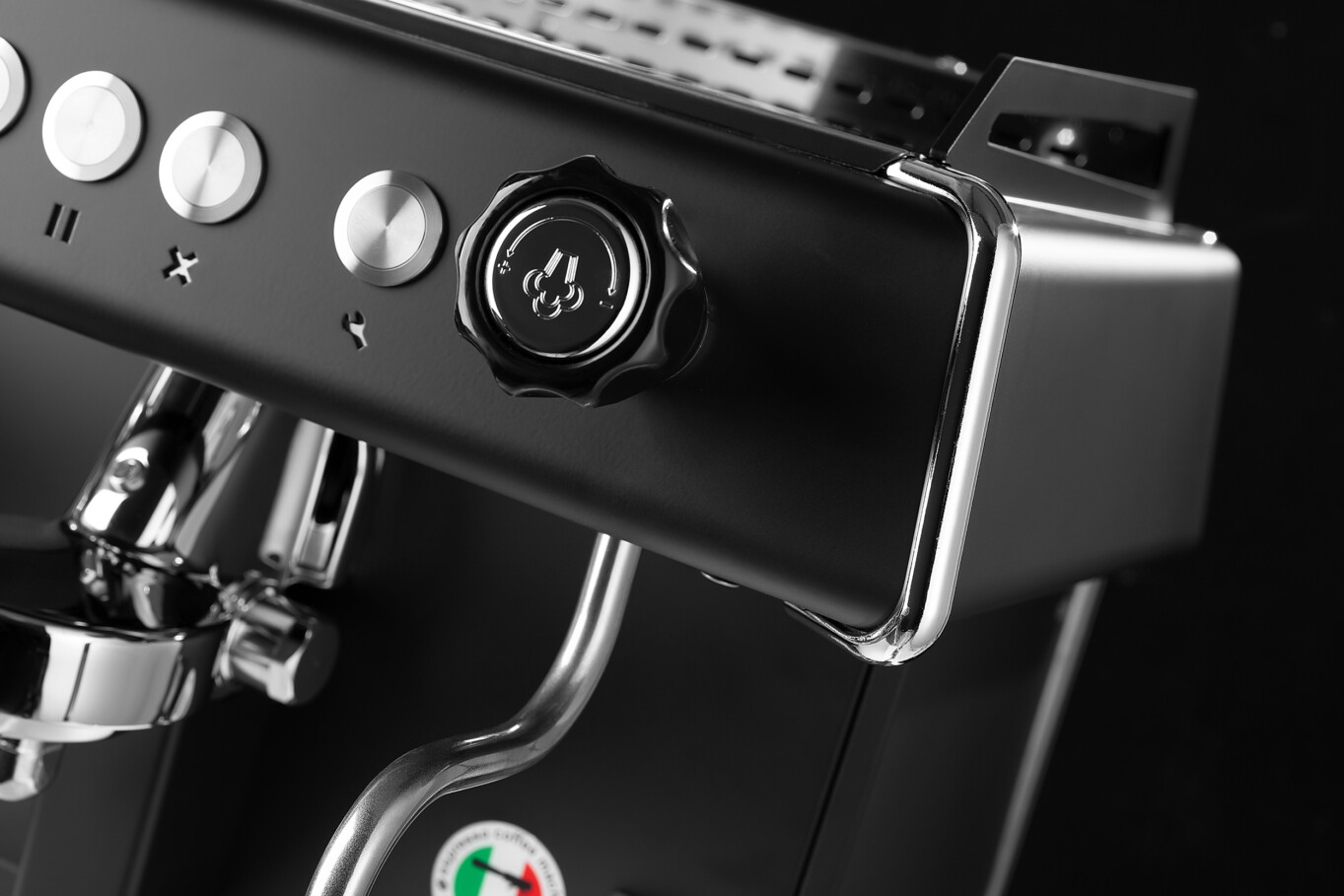
From a coffee machine servicing point of view, the Vittorio RS is appealing because it keeps the fundamentals relatively straightforward: copper boiler, volumetric controls, accessible components and practical cleaning functions. That matters when you’re thinking beyond the first week of ownership and looking at what the machine will be like to maintain after thousands of shots.
Copper boiler with insulation. The RS uses a copper boiler (available in different litre capacities depending on configuration) that’s lagged to cut down on standby heat loss. This translates to reduced operational expenses and a machine that maintains a steadier temperature during peak hours, unlike one that fluctuates with continuous use.
Electronic volumetric dosing. Each group has programmable buttons for consistent shot volumes, so your baristas aren’t eyeballing extraction times between customers. Consistency, often underestimated, is key to retaining customers and simplifying new employee training.
Cool-touch steam wands. The anti-scald steam nozzles are a small thing until someone brushes past one during service. Worth mentioning to any venue that’s had a near-miss with an older machine.
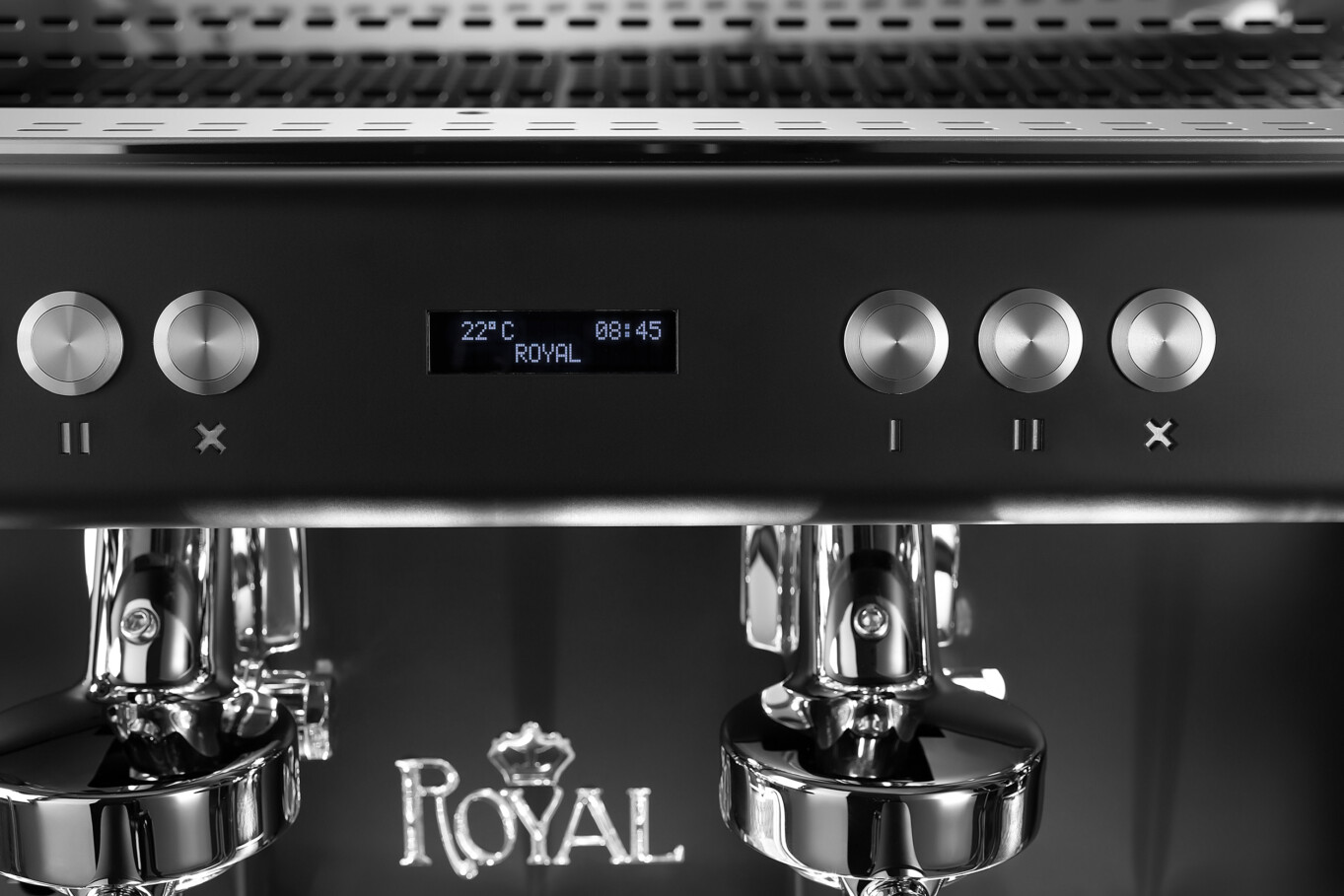
LED worktop lighting and LCD display. Genuinely useful in venues with darker counter setups, and the display makes programming and diagnostics far less fiddly than machines relying purely on physical dials.
Automatic backflush cleaning cycle. Built-in cleaning programs reduce the room for human error — which, if you’ve ever had a machine go down from a missed backflush, you’ll know is not a small thing.
Hot/cold water economiser and dedicated hot water outlet. Handy if your menu includes teas, Americanos or anything else that needs hot water on tap without pulling it through a group head.
If you’re comparing spec sheets side by side, it’s also worth checking the exact boiler capacity, voltage and amperage on the specific configuration you’re quoted — BFC offers a few variants across the Vittorio RS line, and the “HG” spec you’re looking at may differ slightly from the base electronic model in finish or fit-out. We will confirm that specific detail with you prior to ordering, rather than have you rely on a generic specification sheet.
Who Should Actually Be Looking at This Machine
To be frank, a 2-group commercial espresso machine isn’t suitable for every situation, and it’s better to be upfront about this than to tell every interested party that it’s the ideal choice.
It makes sense for:
- Independent cafés doing a steady, sociable trade rather than a 300-plus-cup CBD grind
- Restaurants and function venues wanting proper commercial reliability without a 3-group machine’s footprint or price
- Roasteries and specialty coffee businesses that want manual control over extraction rather than a fully automatic bean-to-cup unit
- Venues upgrading from an ageing domestic or prosumer machine that’s starting to cost more in call outs than it’s worth
- Where we’d be more cautious:
- High-volume venues doing sustained back-to-back service across multiple stations — that’s a 3 or 4 group conversation
- Businesses wanting a fully automatic, one-touch machine with no manual barista input
- Venues without a clear cleaning routine or water filtration plan — even a solid commercial machine will suffer if scale, milk residue and missed backflushes are allowed to build up
- Businesses that are mainly chasing a design statement rather than a practical service machine — there are more premium-looking options if brand theatre matters more than maintainability
If you’re not sure which side of that line you sit on, the honest answer is usually “come talk to us about your actual daily cup count” rather than guessing from a spec sheet. We would also ask about your peak-hour demand, number of baristas on shift, milk drink volume, available bench space, water quality and whether you have room for the right grinder setup beside the machine.

How It Compares to Other 2 Group Machines
Most of the enquiries we get for the Vittorio RS 2 Group HG are from people also looking at a shortlist of other Italian-made 2 group espresso machines. Here’s roughly where it sits:
|
Machine |
Group Config |
Boiler Type |
Best Suited For |
|
2 group, electronic volumetric |
Insulated copper |
Independent cafés & restaurants wanting a durable, semi-automatic workhorse |
|
|
Nuova Simonelli Appia II |
2 group, electronic or semi-auto |
Copper |
Similar-tier cafés wanting a well-known name and wide parts availability |
|
Rancilio Classe 5/7 |
2–3 group options |
Copper, PID options on some models |
Venues wanting tighter temperature control and scalability |
|
Wega/Astoria 2 group ranges |
2 group, various control options |
Copper |
Budget-conscious venues after a reliable, no-frills unit |
|
1–2 group |
Copper, dual boiler on PB |
Specialty-focused venues prioritising extraction control and brand prestige, at a higher price point |
The short version: the Vittorio RS competes well against Nuova Simonelli and Rancilio-tier machines on build quality and consistency, without stepping up into La Marzocco pricing. It is not the flashiest option on the shortlist, and it will not suit every specialty-focused venue, but for operators who want a dependable commercial workhorse with sensible features, it is a practical middle-ground choice. If your priority is manual control, thermal stability, straightforward maintenance access and a machine that can be supported long-term, it earns its place on the shortlist.
Why Buy It Through Service Sphere
There’s no shortage of places to buy a commercial espresso machine online. Where we think we earn the sale is everything that happens after the invoice: choosing the right configuration, setting it up correctly, making sure the water treatment is suitable, and being there when the machine needs maintenance rather than leaving you to troubleshoot during service.
We’re not just moving boxes — our team services, repairs and maintains these machines day in, day out, which means when you buy through us, you’re also getting people who actually know how to keep it running. That’s a very different experience to buying a machine off a generic import listing and being on your own when something needs adjusting six months in.
A few things worth knowing:
- We can talk you through the right configuration for your actual cup volume, not just upsell the biggest machine on the floor
- Genuine parts and prompt servicing, rather than a long wait on imported components
- Installation and commissioning done properly, including water filtration setup, pressure checks and a basic handover with your staff — steps that get skipped more often than they should
- If you’ve got an old machine to move on, ask us about our current trade-in and trade-up offer — it can take a decent chunk off the price of stepping up to something like the Vittorio RS
Get in touch with our team for a quote and we’ll walk you through what a Vittorio RS 2 Group HG setup would actually look like for your venue.
Frequently Asked Questions
How many coffees a day can a 2 group espresso machine handle?
As a rough guide, a well-maintained 2 group machine can comfortably handle anywhere from 80 to 200+ cups a day depending on your workflow, staffing and how the machine is configured. It comes down more to your service flow than a hard number on a spec sheet.
Is the BFC Vittorio RS 2 Group HG suitable for a small café, or is it overkill?
It’s a genuinely popular choice for small-to-medium independent cafés. It’s not overkill if you’re running a proper commercial service — it’s actually a step up in reliability from many domestic or semi-commercial units that get pushed harder than they’re built for.
Does the machine come with a grinder included?
Unlike standard setups, espresso machines and grinders are generally bought as separate items, enabling you to pair a grinder with your specific bean and volume requirements. Ask us about pairing options when you get a quote.
What kind of maintenance does it need?
Like any commercial espresso machine, it needs regular backflushing, cleaning of the steam wands, water filtration suited to your local supply, and periodic servicing of group seals, shower screens, valves and safety components. The RS’s automatic backflush cycle takes some of the daily guesswork out of it, but it still depends on staff actually following a cleaning routine. In our experience, the machines that last best are the ones where preventative servicing is treated as part of normal operations, not something booked only after a fault appears.
Can it be plumbed in, or does it need a water tank? It can be plumbed directly into your water line (recommended, and typically paired with a filtration system), or run from a tank in venues where plumbing isn’t practical. We can advise on the best setup during installation.
Is finance or a payment plan available? Speak to our team directly — we can talk you through the options available at the time of your enquiry.
What’s the difference between the RS and other BFC or Royal-branded models? BFC’s machines are also sold under related badges depending on region and distributor, and the lineup includes several models (Lira, Galileo, Deep Black RS, Vittorio RS) with different boiler sizes and control options. If you’re comparing exact spec sheets, it’s worth confirming the configuration name and number with us directly, since branding can vary slightly between markets.
How much bench space should I allow for the machine?
Check the exact dimensions of the configuration you’re quoted, but also allow practical working room for grinders, tamping, knock tubes, milk jugs and cups. A 2 group machine is only efficient if the whole coffee station is laid out properly.
What grinder should I pair with it?
That depends on your volume, coffee style and whether you’re running one blend or multiple options. We recommend choosing the grinder at the same time as the machine rather than treating it as an afterthought, because grinder performance has a direct impact on consistency in the cup. See our Eureka grinders range.
How often should I book preventative servicing?
The frequency of preventative servicing in commercial venues should consider factors like usage patterns, water conditions, and the intensity of use during busy times. If you’re doing steady daily trade, it’s worth setting up a service schedule rather than waiting for a breakdown during service.
Thinking about upgrading your machine?
Get in touch with the Service Sphere team for a no-pressure chat about what actually suits your venue — and don’t forget to ask about our current trade-in offer if you’ve got an old machine to move on.