

How Often Should a Commercial Coffee Machine Be Serviced?
A businesses commercial coffee machine is one of the most important investments for any coffee shop, restaurant or hospitality business. With these pieces of equipment often operating for hours each day and producing hundreds of coffees during busy service periods, regular maintenance is essential to maintaining performance, consistent coffee quality and reliability. However, even well-built commercial espresso machines require professional attention to keep their internal components operating as they should.
So, how often should a commercial coffee machine be serviced? While the recommended frequency depends on the machine, daily workload and water quality, most commercial coffee machines benefit from professional servicing every 6–12 months. For busy cafés and high-volume hospitality venues, more frequent commercial coffee machine servicing may be necessary to reduce the risk of unexpected breakdowns and costly repairs.
In this article, we'll take a look at how often a commercial coffee machine should be serviced, what is included in a professional service for you, and also the preventative maintenance steps businesses can take to extend the working life of their equipment. Whether we’re talking about a traditional espresso machine or a fully automatic commercial coffee system, understanding the correct servicing schedule can help keep your business running smoothly.
Book a Service with Us
How Often Should a Commercial Coffee Machine Be Serviced?
Of course the recommended servicing frequency for a commercial coffee machine depends on a number of different factors, including the daily coffee output, the operating hours, water quality in the area and the type of equipment being used.
As a general guideline though, the majority of commercial espresso machines should receive a professional service every 6–12 months. However, some businesses, particularly those operating high-volume coffee machines may benefit from more frequent inspections to identify worn components and prevent unexpected equipment failures at inconvenient times.
The following table provides a general guide to commercial coffee machine servicing intervals:
|
Business type |
Recommended servicing interval |
|
Small office or low-volume venue |
Every 12 months |
|
Small café or coffee bar |
Every 6–12 months |
|
Busy café or restaurant |
Every 6 months |
|
High-volume hospitality venue |
Every 3–6 months |
These intervals that have been listed above are a starting point rather than a fixed rule. You will always need to consider the manufacturer's recommendations and the advice of your coffee machine technician when establishing a proper servicing schedule.
It's also important for you to be able to distinguish between routine cleaning and professional servicing. Daily backflushing, cleaning group heads and maintaining steam wands are essential, but they don't replace a technical inspection of the machine's internal components.
For more information about everyday cleaning routines, see our guide to Coffee Machine Maintenance & Care.
Why servicing frequency matters: Leaving a commercial coffee machine too long between services can allow reasonably minor issues, such as deteriorating seals, a restricted water flow and or a mineral build-up, to develop into more expensive repairs.
Why Is Regular Commercial Coffee Machine Servicing Important?
Commercial espresso machines are designed to operate under demanding conditions, often running continuously throughout busy trading periods. Over time, regular use places pressure on internal components, seals, pumps, boilers and heating systems. Without appropriate maintenance, these components can deteriorate and affect the machine's performance, reliability and coffee quality.
Booking in a scheduled regular commercial coffee machine service helps identify potential problems before they develop into more serious faults. There are several important benefits for cafés and hospitality businesses.
Maintain Consistent Coffee Quality
Water temperature, brewing pressure and water flow all play an important role in producing consistent espresso. Worn group head seals, blocked shower screens or temperature fluctuations can affect extraction and lead to inconsistent coffee quality.
Professional servicing helps ensure the machine's brewing systems are operating correctly, allowing baristas to maintain consistent results throughout the day.
Reduce Unexpected Equipment Breakdowns
A coffee machine breakdown during the morning rush can quickly disrupt café operations and result in lost sales.
Preventative maintenance allows technicians to identify worn components, leaks and developing mechanical issues before they cause unexpected failures. Addressing these problems during scheduled servicing can help minimise downtime and reduce the need for emergency repairs.
Extend the Working Life of Your Equipment
Commercial coffee machines represent a significant investment, particularly premium equipment from manufacturers such as La Cimbali, La Marzocco, Rancilio and Eversys.
Regular inspections, appropriate cleaning and timely replacement of worn components can help protect this investment and extend the working life of your equipment.
Reduce Long-Term Repair Costs
Minor problems can become considerably more expensive if left unattended. A deteriorating group head seal, for example, may initially cause a small leak but can lead to further complications if ignored.
Regular commercial coffee machine maintenance helps identify these issues early, allowing businesses to address them before they require more extensive repairs.
Prevent Limescale and Mineral Build-Up
Water quality is another important consideration. Minerals present in untreated water can accumulate inside boilers, heating elements and internal water circuits, potentially affecting heating efficiency and machine performance.
Appropriate water filtration, regular inspections and preventative maintenance help reduce the risk of scale-related problems and protect important internal components.

What Is Included in a Professional Commercial Coffee Machine Service?
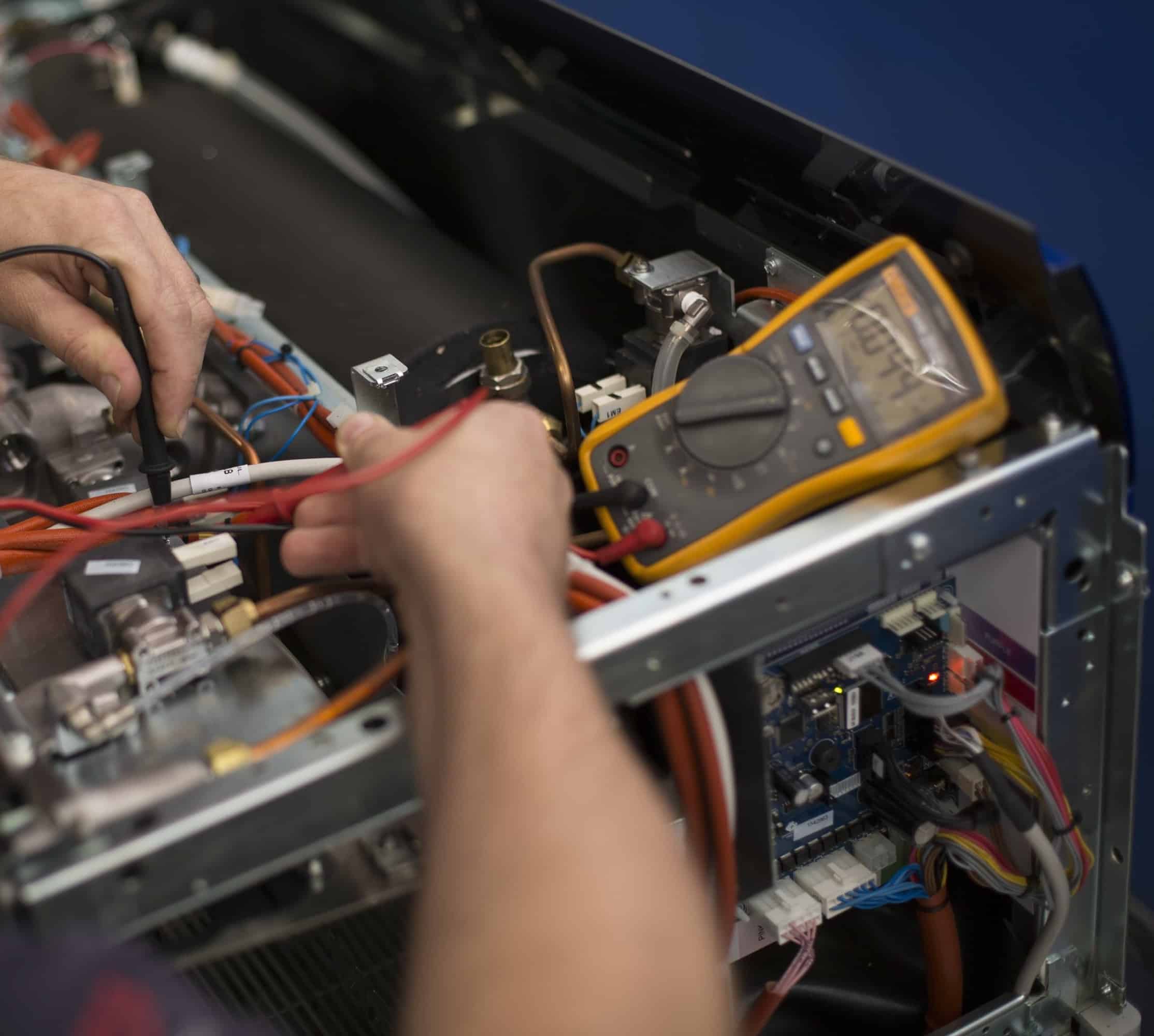
A professional commercial coffee machine service involves more than cleaning the group heads or backflushing the machine. It requires a thorough inspection of the equipment's main operating systems to identify worn components, potential faults and anything that could affect performance or reliability.
While the exact servicing requirements vary between manufacturers and models, a typical commercial espresso machine service will cover several important areas.
Group Heads and Brewing Components
Group heads are exposed to coffee oils, residue and repeated use throughout the day. During servicing, technicians inspect group head seals, shower screens, dispersion components and water flow to ensure everything is operating correctly.
Worn seals and damaged components may need replacing to prevent leaks and maintain consistent extraction.
For a closer look at how these components work, see our article on Coffee Group Heads.
Boilers, Pumps and Pressure Systems
Boilers and pumps are essential for maintaining consistent brewing temperatures, water pressure and steam production.
A technician will inspect boiler operation, assess pump performance, check pressure readings and look for signs of leaks or mineral build-up. Identifying problems early can help prevent more extensive repairs.
Steam Wands and Milk Systems
Steam wands and automatic milk systems require regular attention, particularly in busy cafés where they are used continuously.
Servicing may include inspecting steam valves, checking seals, clearing blockages and assessing steam pressure to ensure reliable milk texturing.
Water Filtration and Plumbing
Water quality has a direct impact on commercial coffee machine performance and longevity. Technicians can inspect filtration equipment, check water connections and assess whether filters require replacement.
Service Sphere also specialises in water filtration solutions, including Everpure water filtration systems, which help businesses manage water quality and protect their coffee equipment.
Electrical Components and General Operation
A professional service should also include an assessment of electrical connections, temperature controls, switches, sensors and other relevant operating components.
The technician will check the machine's general operation and identify any developing faults that may require further investigation.
The servicing requirements will vary depending on the machine, its condition and manufacturer recommendations. For example, maintaining a traditional La Marzocco or Rancilio espresso machine involves different considerations from servicing a fully automatic Eversys system.
You can also read our guides to Rancilio coffee machine repairs and coffee machine maintenance and care for further information.

Signs Your Commercial Coffee Machine Needs Servicing
Even with a regular maintenance schedule, commercial coffee machines can develop problems that require attention before their next scheduled service.
Recognising the early warning signs can help prevent minor faults from becoming more expensive repairs or causing unexpected downtime.
Some common indicators that your commercial coffee machine needs professional attention include:
- Inconsistent espresso extraction: Changes in brewing pressure, water flow or temperature can affect extraction times and coffee quality.
- Reduced steam pressure: Weak steam performance can indicate problems with the boiler, steam valves or internal components.
- Water leaks: Leaking around group heads, underneath the machine or near plumbing connections may indicate deteriorating seals or damaged components.
- Unusual noises: Changes in pump operation, excessive vibration or unfamiliar sounds can indicate developing mechanical problems.
- Temperature fluctuations: Difficulty maintaining consistent brewing or steam temperatures may suggest an issue with the heating system or temperature controls.
- Recurring error messages: Modern commercial coffee machines often display diagnostic warnings when components aren't operating correctly.
If you notice any of these symptoms, it's worth arranging an inspection rather than waiting for your next scheduled commercial coffee machine service.
Keep Your Commercial Coffee Machine Performing at Its Best
Regular commercial coffee machine servicing is essential for maintaining equipment reliability, consistent coffee quality and smooth day-to-day operations. While daily cleaning and routine maintenance help keep your machine in good condition, professional servicing ensures that important internal components are inspected and maintained.
At Service Sphere, our experienced technicians work with commercial coffee machines from leading manufacturers, including La Cimbali, La Marzocco, Rancilio, ECM and Eversys.
Whether you operate a small café, busy restaurant or high-volume hospitality venue, establishing an appropriate preventative maintenance schedule can help reduce unexpected breakdowns and protect your equipment investment.
If your machine is due for a service or showing signs of a developing fault, contact Service Sphere to arrange commercial coffee machine servicing.
Frequently Asked Questions About Commercial Coffee Machine Servicing
How often should a commercial coffee machine be serviced?
Most commercial coffee machines should receive professional servicing every 6–12 months. However, high-volume cafés and hospitality venues may require servicing every 3–6 months depending on usage, water quality and manufacturer recommendations.
What is included in a commercial coffee machine service?
A professional service typically includes inspecting group heads, boilers, pumps, pressure systems, steam wands, electrical components and water connections. Worn seals and other components may also be replaced where necessary.
How much does commercial coffee machine servicing cost?
The cost depends on the machine's manufacturer, model, condition and the work required. Routine preventative servicing will generally involve different costs from more extensive repairs requiring replacement parts. Contact a technician for a quote based on your equipment.
Can I maintain my commercial coffee machine myself?
Daily cleaning, backflushing and routine maintenance can be performed by trained café staff. However, internal components, pressure systems and electrical systems should be inspected and maintained by an appropriately qualified technician.
What happens if I don't service my commercial coffee machine?
Neglecting professional servicing can lead to limescale accumulation, leaking seals, inconsistent brewing temperatures, reduced steam pressure and unexpected component failures. These problems can affect coffee quality, increase repair costs and interrupt business operations.
How long does a commercial coffee machine service take?
A routine service may take a few hours, depending on the machine's configuration and condition. More complex machines or those requiring additional repairs may take longer, particularly if replacement parts are needed.
Does water quality affect how often a coffee machine needs servicing?
Yes. Water hardness and mineral content can contribute to limescale accumulation inside boilers, heating elements and internal water circuits. Appropriate filtration and regular inspections can help protect the machine and reduce scale-related problems.